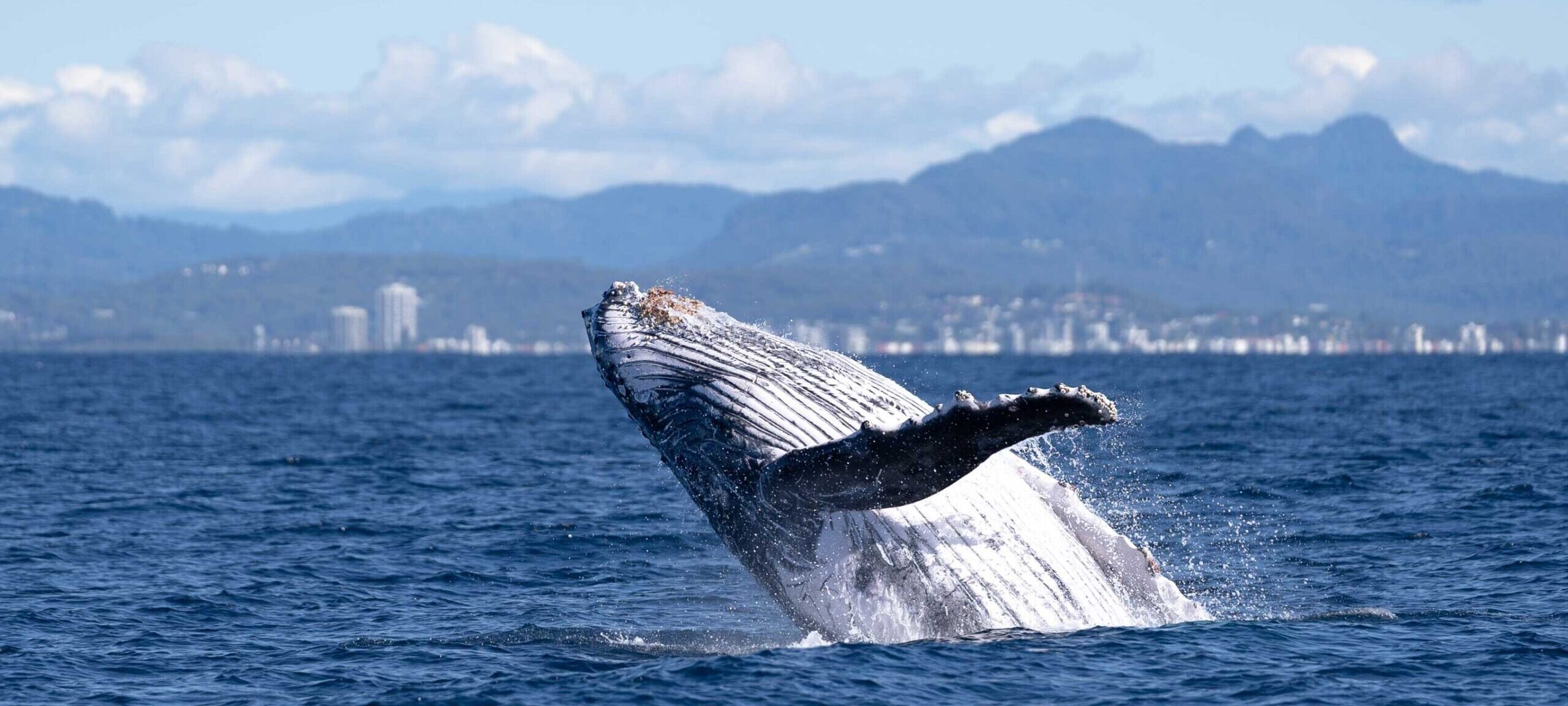
The Gold Coast is one of the best destinations to enjoy the annual humpback whale migration.
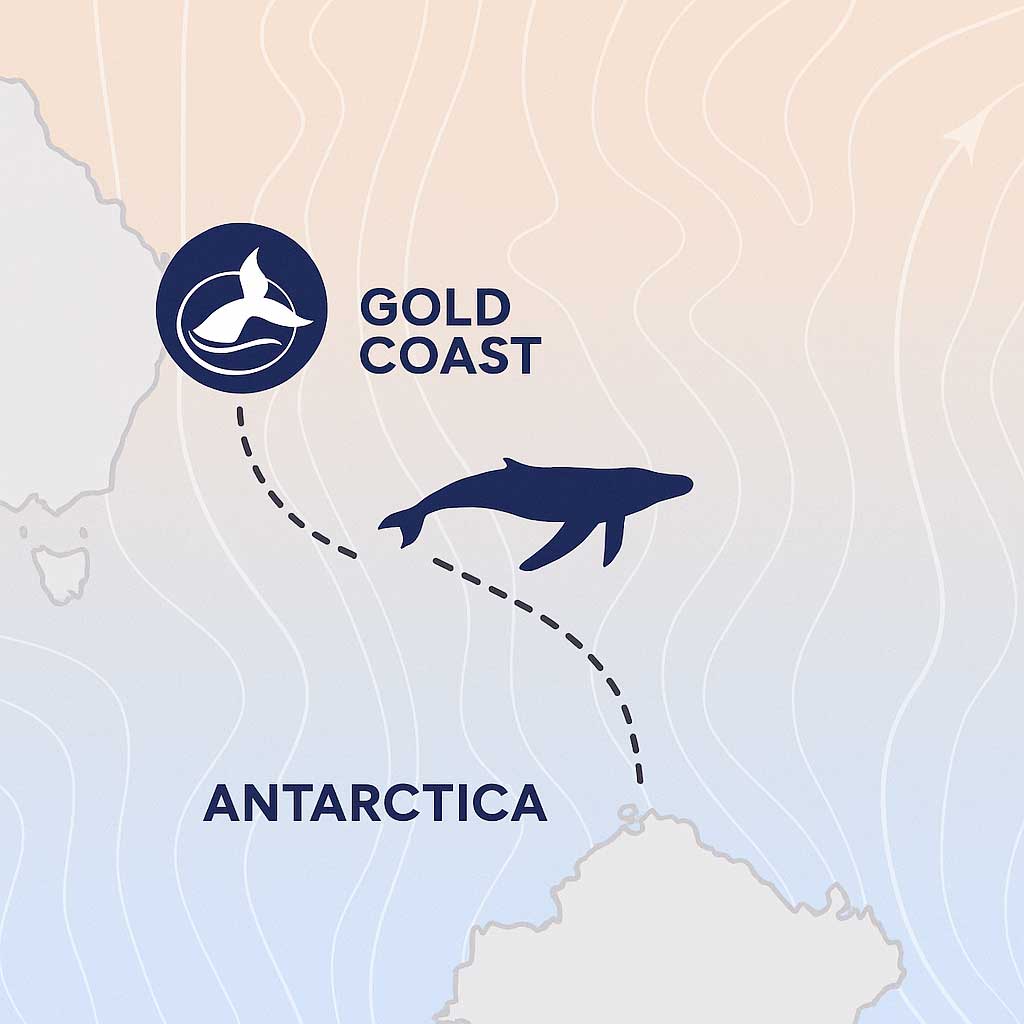
This is because it’s positioned to have the longest continuous migration in Australia. During the Gold Coast whale season, all 40,000 (approx.) humpback whales that travel up the east coast of Australia pass by the Gold Coast Bay.
The Humpback Whales depart their home in Antarctica and make their way north for a few different reasons.
Firstly, the whales migrate to warmer waters throughout winter to breed. The breeding activity we witness onboard our Whale Watching Gold Coast cruise is called the “Heat Run’. This is when a female has amassed attention from the males in the area, usually resulting in incredibly large pods of whales travelling quickly and erratically.
The female will generally be leading the pack, with the males battling for position to get alongside and prove they’re worthy of being able to mate with. These behaviours are incredibly exciting to experience as we can often see a lot of breaching and peduncle (whale tail) throws. This behaviour can be witnessed throughout the entirety of the humpback whale migration on the Gold Coast, from June to October.
The second reason humpback whales migrate north is to give birth.
A humpback whale pregnancy lasts approximately 12 months, and the calves conceived during the previous migration need to be given birth to in warm conditions to survive long enough to put on amass blubber (large fat deposits). This keeps them warm when they travel down to Antarctica at the end of the migration.
The calves are born in the waters from Northern NSW to far North Queensland, with lots of calves being born on the Gold Coast.
A fresh calf is approximately 1 meter in length and weighs around 1 tonne, they have a light grey skin tone and a bent dorsal fin (the key trait of being under 1 week old). The baby whale (calf) will live alongside its mother for the first 1-3 years of its life, during this first migration, it will drink an average of 500L of its mothers milk a day to help it grow and produce its fat supplies. By the end of the whale migration, the calves will have doubled (or more) in size.
The migration for the mother whale will be incredibly strenuous, as she not only has to go through childbirth and feeding the calf, but does this with little to no food for the entirety of the migration. A mother whale will often lose 1/3rd of their body weight by the time they arrive back in Antarctica and their summer feeding grounds.
The best opportunity to see newborn calves is during the early-mid season (Late June-July).
Book now to see these incredible creatures up close!